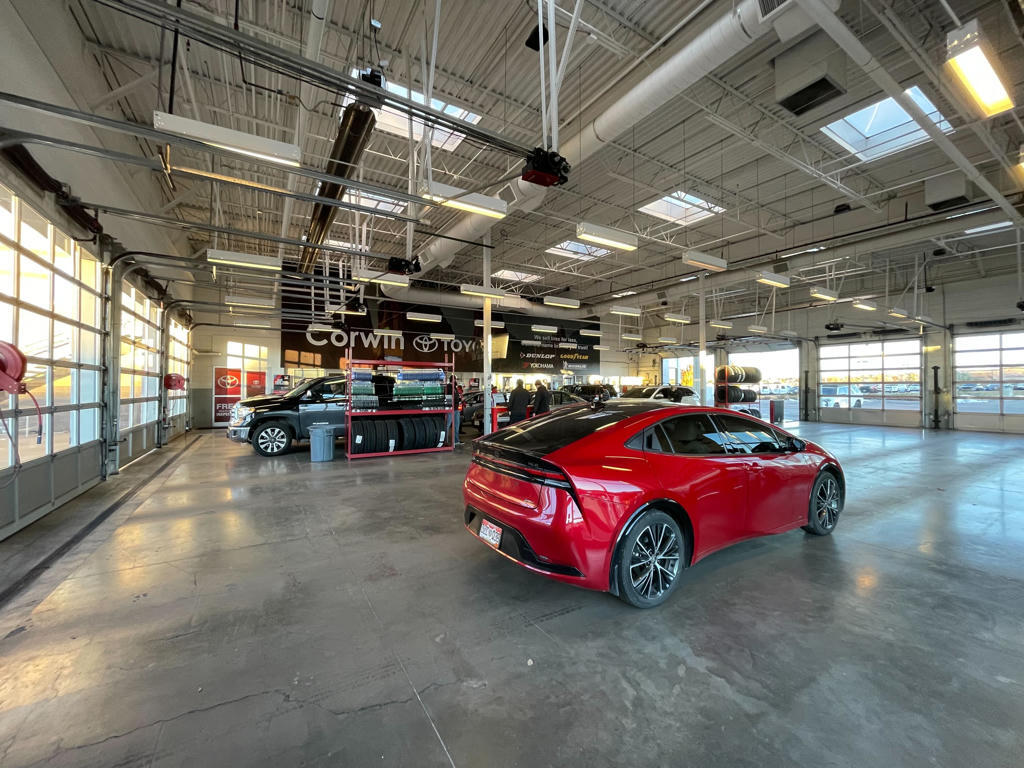
Stop putting out fires in your service drive.
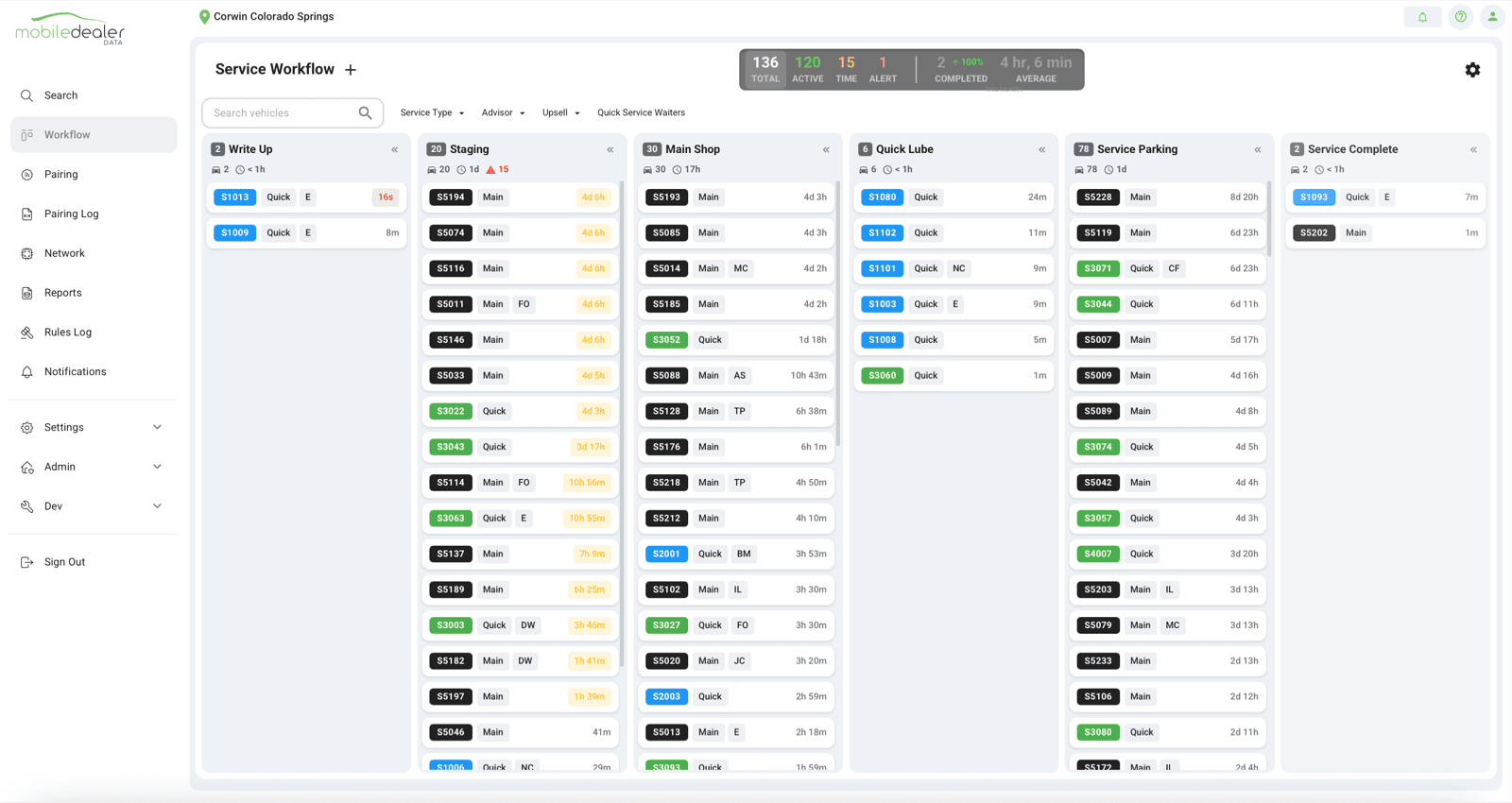
Service Workflow cuts service lane cycle time by tracking every vehicle by its real location, from write-up to delivery. Stalls get caught while the customer is still in the lounge — not on the survey.
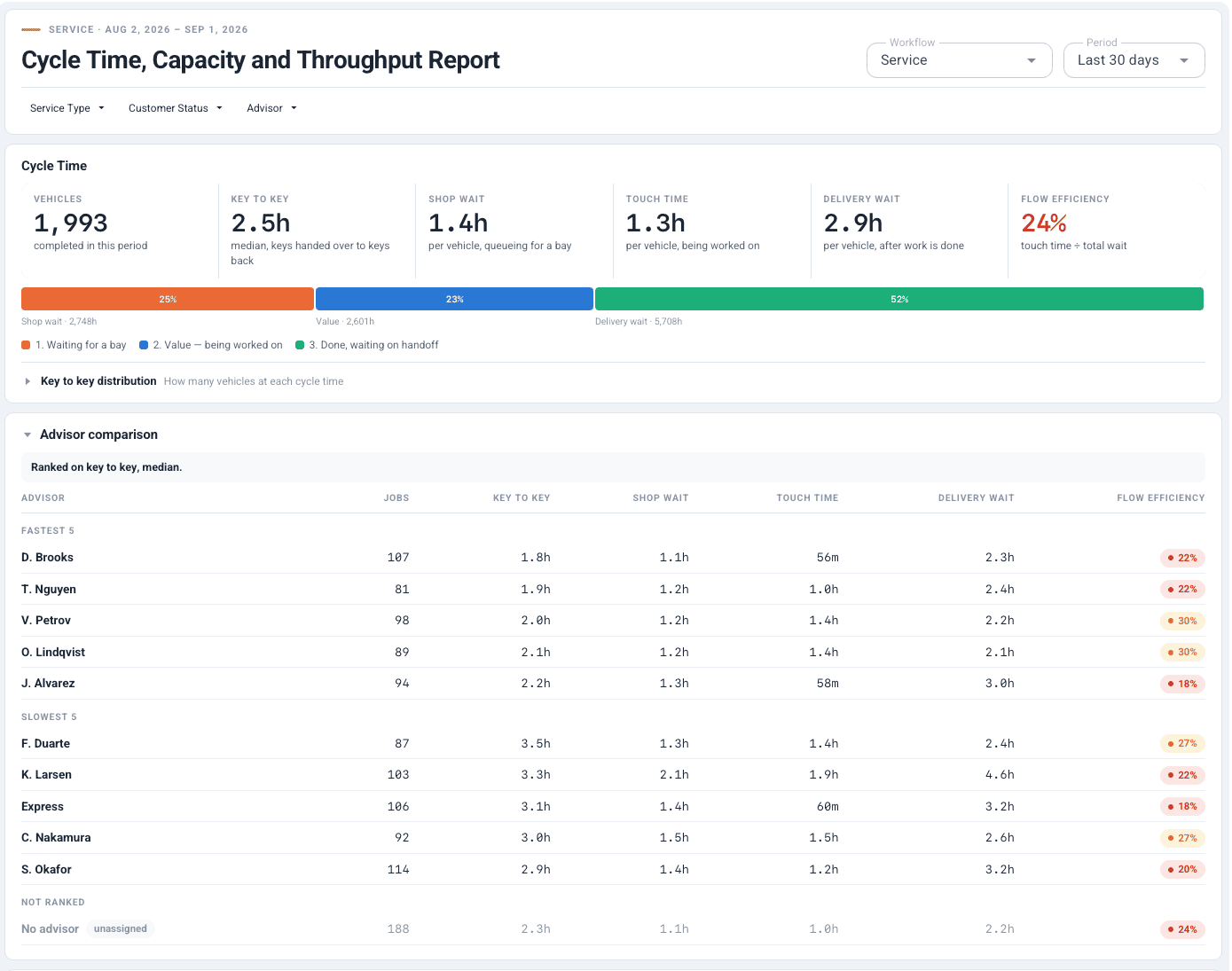
Stores running heavy Quick Service or Express Maintenance start out around two and a half hours to delivery. On average, they end up with 96% of vehicles out under an hour and a half — and 64% under an hour.
Typical MDD Service Workflow customers — Express Service waiters.
Each vehicle's card advances on its own, automated by the movement of the vehicle itself. Nothing is typed, dragged or updated by hand.
Fifteen minutes, see it live.
A car waits in the lot for a tech. A finished vehicle waits on a wash. A completed car's keys sit under paperwork on an advisor's desk. Nobody sees any of it until the customer walks up to the counter and asks “where is my car?”
Today there is nothing that shows an advisor which of their customers have been waiting too long, which finished car has been parked for over 40 minutes, or whose promise time is about to be missed. MDD gives them that visibility automatically, from the physical location of the car and the key.
“Service managers often focus on stacking work into each repair order. But cycle time management looks at how to add more billable hours through efficiency.”
Ed French — President, AutoProfit GroupCars on the road are older than ever and fixed ops revenue is at a record. Dealers are still losing the work — and when customers say why, the top answer is how long it took to get an oil change.
Cox found that the customers who rated a visit better than expected cited two things: speed and communication. Both come down to one question — did anyone know the car was running late in time to act on it?
Nearly three in four service customers say being able to track progress matters to them. One in four has ever been given it.
CSI is not a vanity score. It sets manufacturer program money and it sits in the service director's pay plan. The fastest way to lose the point is a customer who was told 11:30 and left at 1:15.
We'll show you where your own clock is breaking.
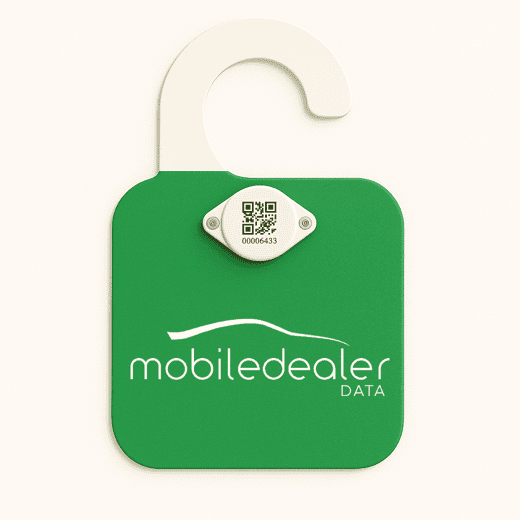
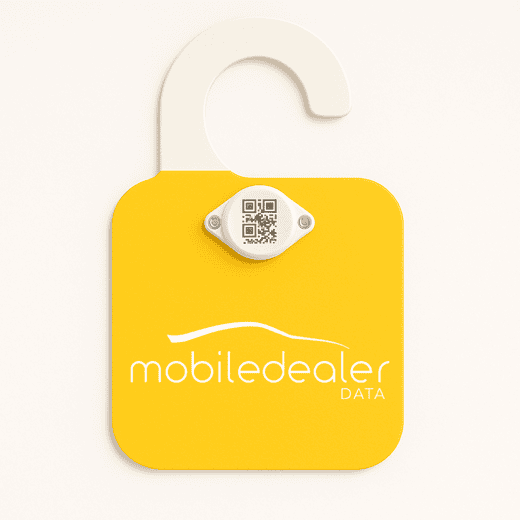
No extra clicks for techs or porters. Nobody has to remember anything. Swap the paper hang tags for tracking tags — your advisors hang a tag at write-up exactly as they do today, and the physical operation keeps the board honest.
No process change. Instant results. MDD Workflow is a no-brainer.
An advisor promises 11:30. Nobody notices the car hasn't moved until 11:20. Service Workflow watches the actual vehicle against the promise and hands the advisor the at-risk list early — early enough to reassign the job, pull in help, or call the customer before the customer calls you.
“With this cycle time tool, we know at the 40-minute mark whether we're having an issue with a particular delivery. We can get help there immediately to meet our delivery promise.”
Warren Weimer — Service & Parts Director, Corwin ToyotaThat time comes back as open bays and technician hours — without more square footage, and without hiring into a market where nobody can find techs.
Capacity only: repair orders × 15 minutes ÷ 60. It is not a revenue forecast, and we won't present it as one on the call either.
Trailing twelve-month trends, with drill-down to the stage and the individual repair order. Median, mean and p90 — so you see the typical car and the slowest ten percent.
We'll pull the same views against one of your stores.
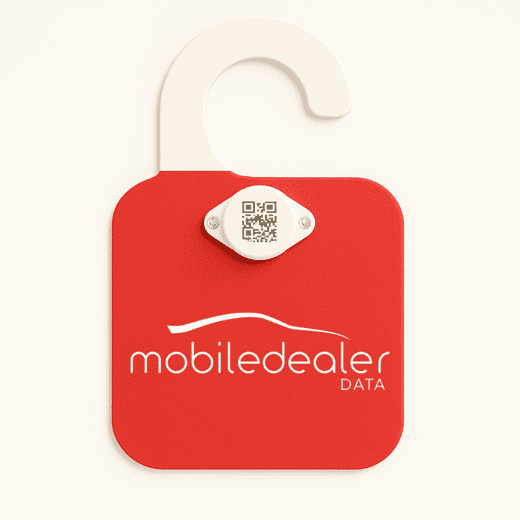
Paper hang tags are single-use, easy to lose, and tell you nothing. MDD's durable, color-coded placards clip on at write-up — each with a built-in tracker that reports the exact location of the vehicle and its key in real time. Reuse them for years.
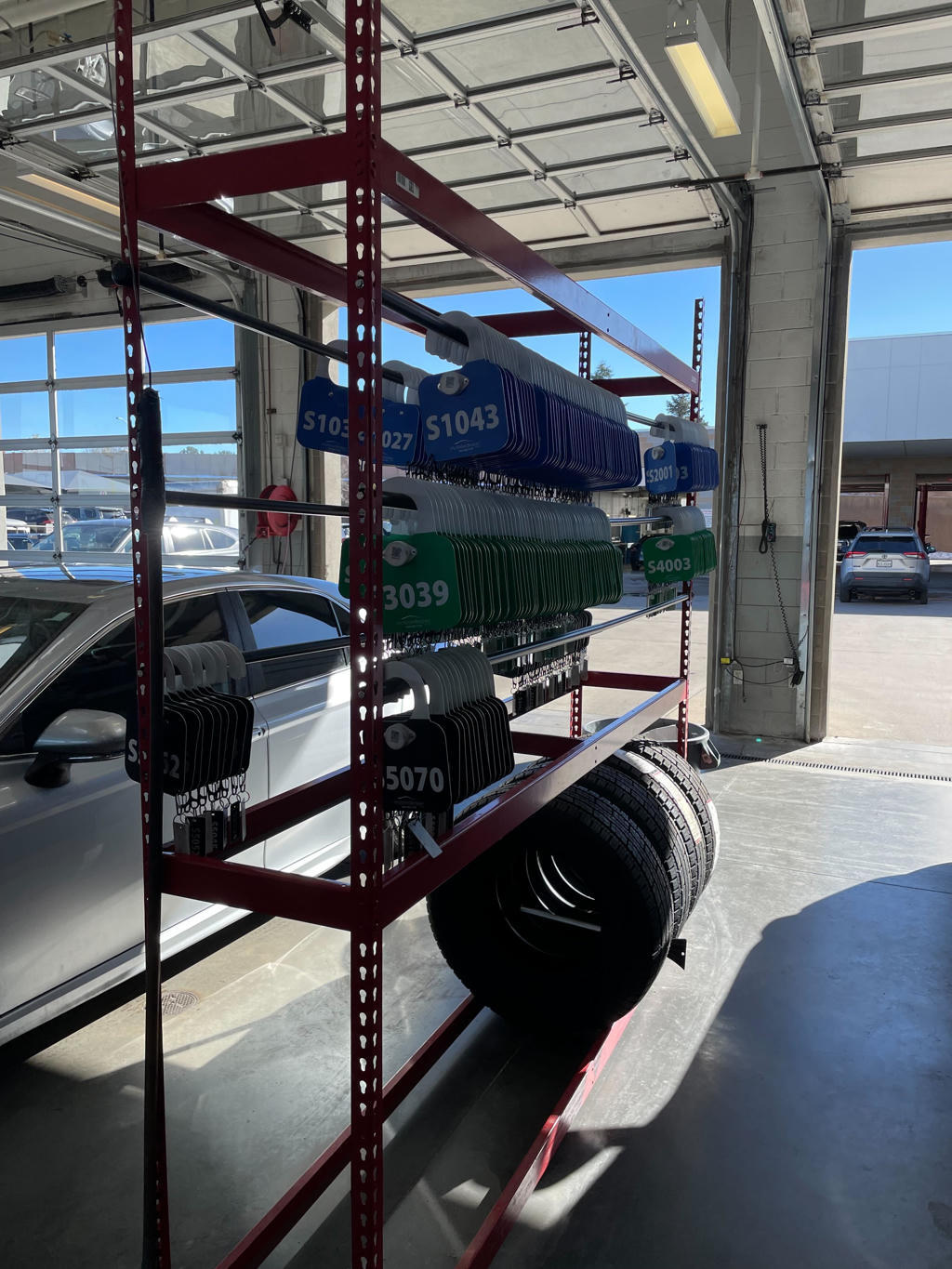
Color-code by status, lane, or department for an at-a-glance read across the drive.
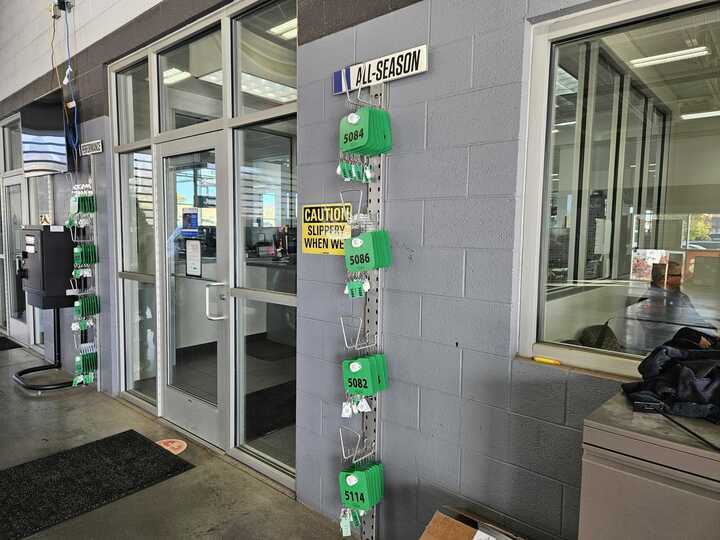
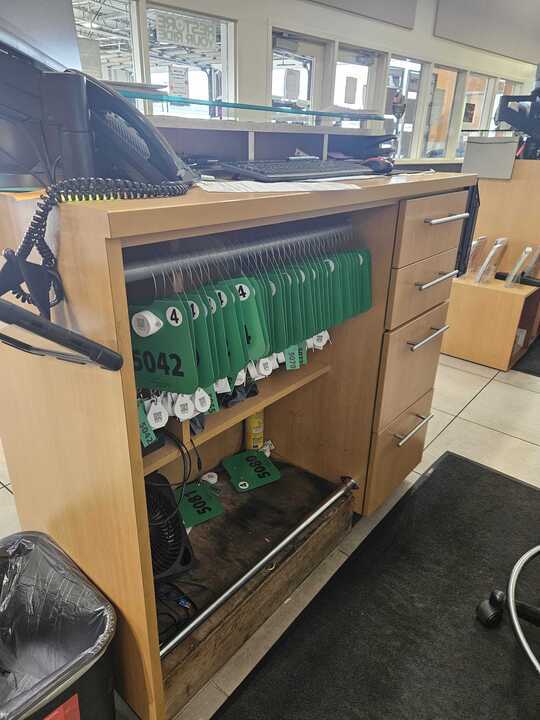
Keep your placards on a wall rack, in a cabinet, or at the tire racks — wherever's handy. They store neatly and are quick to grab and clip into a customer's vehicle. And because they replace single-use paper hang tags, dealers save about $500 a month on average.
A DMS records transactions, not location. MDD records where the vehicle and the key physically are — in a busy service department, the only real source of truth, and the only way to separate productive time from every wait and handoff around it.
Group leaders need one definition of wait, touch time and promise attainment. Store leaders need the exact vehicle and stage creating today's constraint. Both come from the same automatic data.
And once every vehicle is tagged, the same engine shortens time to line in recon — no second rollout, no second project.
“MDD delivers on its promises. Locating a vehicle went from 25 minutes to seconds. Every dealer needs these results.”
Mark Seipel — Fixed Operations Director, Longo ToyotaRunning at Penske Automotive, Lithia Automotive, Morgan Automotive, Longo Toyota, Corwin Toyota and Bill Brown Ford — the highest-volume Ford dealer in the world.
Guaranteed results, or pay nothing. We agree the numbers up front against your own operation. If MDD doesn't hit them, you don't pay for it.
Fifteen minutes with our team. We walk the live workflow, the capacity report it produces, and the 15-minute-per-RO math against your own RO count. No generic deck.
Prefer the phone? 844-292-7110
Fill out the form and our team reaches out within one business day.
✓ On its way.
Or book a 30-minute review →